Leading the New Era of Smart Automation
Industrial logistics is entering a new phase of transformation. As facilities face increasing pressure to move materials faster, reduce labor strain, and adapt to fluctuating demand, traditional transport methods are no longer sufficient. Autonomous Mobile Robots (AMRs) are redefining how goods move within warehouses, manufacturing plants, and distribution centers.
Unlike fixed automation systems, AMRs introduce intelligent mobility — combining flexibility, scalability, and data-driven decision-making. They represent not just an upgrade in equipment, but a shift toward fully adaptive industrial ecosystems.
The Changing Demands of Industrial Logistics
Industrial logistics operations today are more complex than ever. Facilities must handle diverse product ranges, heavier loads, higher throughput targets, and tighter delivery windows.
Manual transport using forklifts or pallet trucks often leads to congestion, inconsistent delivery timing, and increased safety risks. Fixed conveyor systems, while effective, can lack flexibility when layouts change or expansion is required.
Businesses now require systems that can:
- Adapt to layout modifications
- Scale quickly with demand
- Operate safely alongside workers
- Reduce repetitive manual transport
- Integrate seamlessly with digital platforms
AMRs address these needs directly.
What Makes AMRs Different
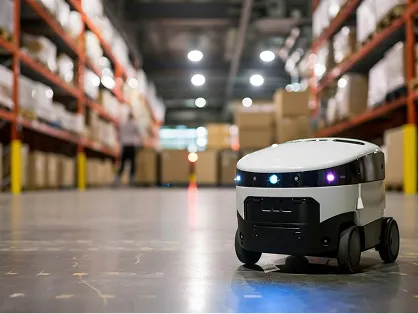
Autonomous Mobile Robots differ from traditional Automated Guided Vehicles (AGVs) because they do not rely on fixed tracks or magnetic strips. Instead, they use advanced sensors, cameras, and mapping technologies to navigate dynamically through facilities.
This flexibility allows AMRs to:
- Adjust routes in real time
- Avoid obstacles automatically
- Operate safely in mixed human environments
- Reconfigure workflows without infrastructure changes
AMRs transform logistics from static movement systems into responsive, intelligent transport networks.
Improving Material Flow Efficiency
One of the primary advantages of AMRs is their ability to optimize internal transport without major structural modifications.
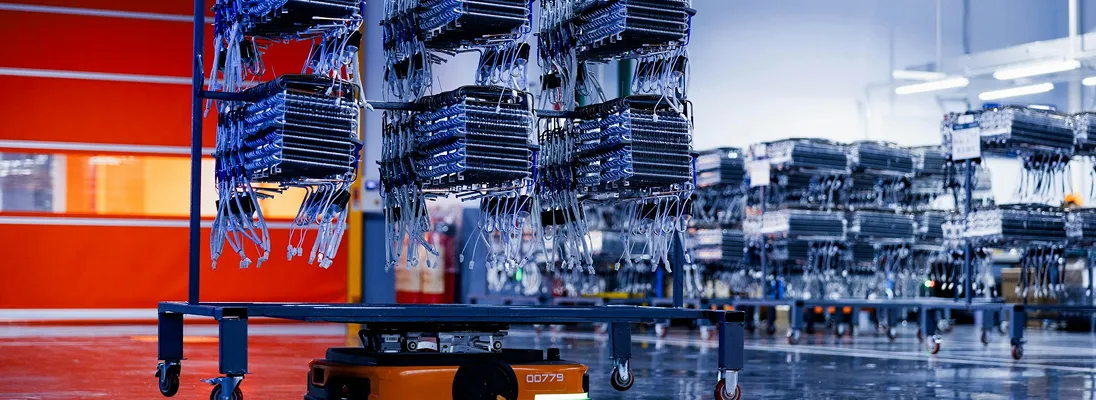
In manufacturing plants, AMRs can move raw materials between storage and production lines, ensuring synchronized delivery without manual intervention. In warehouses and fulfillment centers, they transport goods between picking zones, packing stations, and outbound docks with consistent timing.
By eliminating unnecessary travel and idle time, AMRs reduce congestion and improve flow balance across operational zones.
Facilities that implement AMRs often experience measurable improvements in throughput and process stability.
Scalability Without Disruption
Growth in industrial environments often requires expansion of transport capacity. With traditional infrastructure, scaling can involve major construction and downtime.
AMRs offer modular scalability. Additional robots can be introduced as demand increases, expanding capacity without altering physical layouts. During peak seasons, fleets can be temporarily increased and later reallocated as needed.
This flexibility allows facilities to respond quickly to business growth and market fluctuations without significant capital reinvestment.
Scalability becomes operational rather than structural.
Conclusion
Enhancing industrial logistics with Autonomous Mobile Robots marks a significant step toward smarter, more flexible automation. By combining intelligent navigation, scalability, safety, and data integration, AMRs enable facilities to operate with greater efficiency and resilience. As industrial operations continue to evolve, adaptability will define success. AMRs offer not only automation — but agility. The future of industrial logistics belongs to systems that move intelligently, scale effortlessly, and operate seamlessly alongside human expertise.